



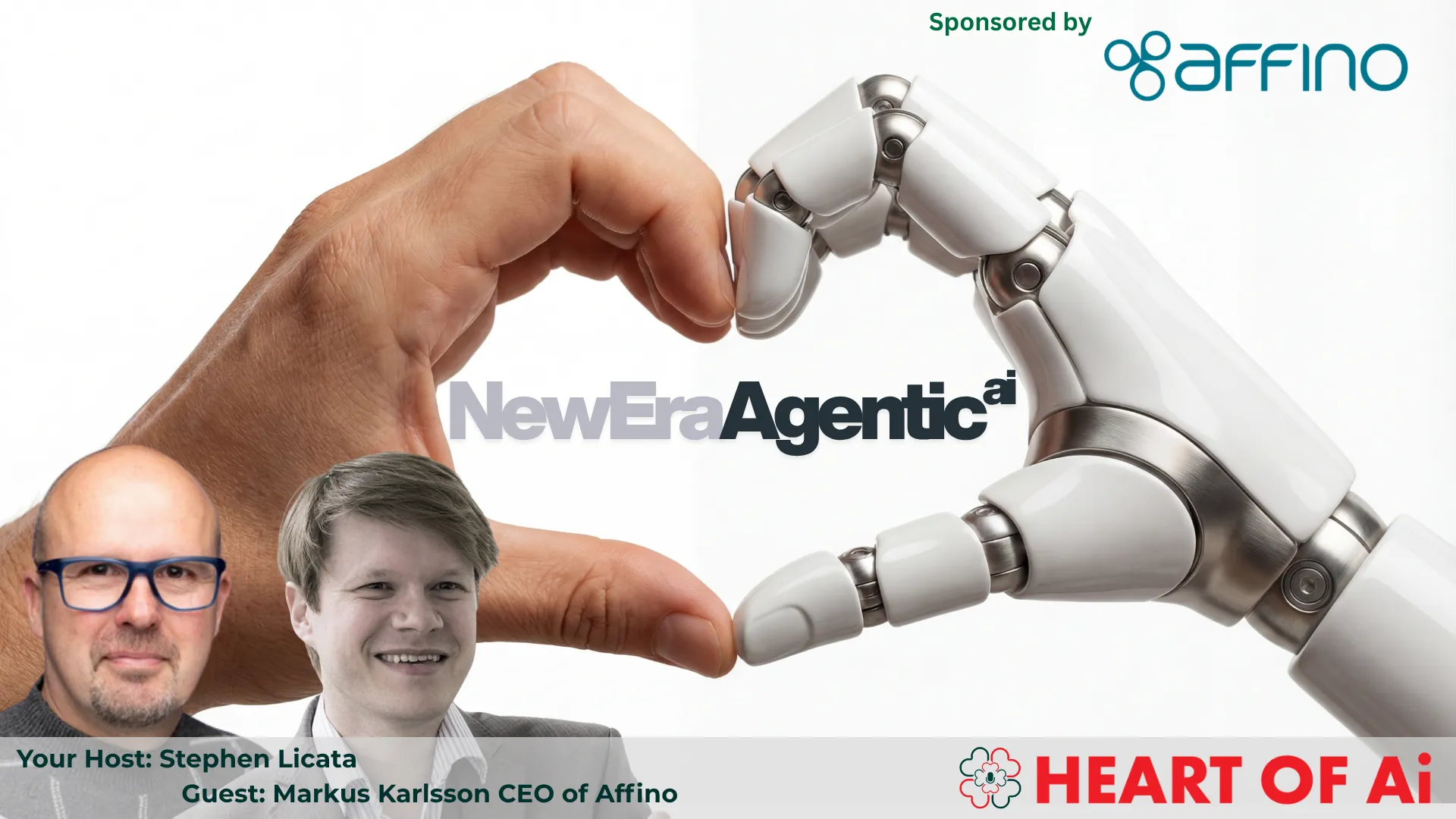
New Era of Agentic Ai
 Stephen Licata
Baby Yoda Has Arrived: The Agentic AI Era Just Changed Everything
In just 4 weeks, AI went from “cool tool” to “entire thinking workforce.”
Markus Karlsson (Athena) shares the raw, unfiltered truth: 10× faster development, lazy hallucinating AIs, the hilarious “Karen AI” that checks everyone’s homework, and why his team now has AIs asking about each other on weekends.
We call it Baby Yoda for a reason — insanely powerful, but still a toddler that needs serious parenting.
If you’re building anything in 2026, this episode is essential listening.
Timestamps:
00:00 – The day everything changed
06:30 – The 3-AI “never trust one model” system
19:10 – Why we call it Baby Yoda
27:40 – Development in 2 weeks instead of 6 months
41:20 – Athena Hub launching soon
Drop a 🔥 if your mind is blown. Who’s ready for the agentic future?
#AgenticAI #BabyYodaAI #Claude #AIRevolution #10xDevelopment #FutureOfWork


Spot-on benefits backed by the latest stats:
- Productivity lift: UK businesses seeing AI collab report gains of 11.5% to 20%, while Deloitte notes 66% of organisations across Europe and the UK clocking efficiency wins – that’s more time for your side hustles, uni projects or just chilling.
- Smarter decisions with human flair: AI crunches the numbers fast, but you bring the empathy, context and gut feel. In the NHS, AI notetaking tools free up doctors for up to 25% more face-to-face patient time – real human connection sorted.
- Future-proof careers: Evidence leans toward net job creation in Europe, especially for skilled roles, with the EU AI Act putting human oversight front and centre to keep things fair and ethical. Gen Z in the UK and EU are leading adoption but rightly calling for proper training.
- Creativity on another level: From DeepMind’s UK breakthroughs to EU creative industries, AI sparks ideas you refine into something uniquely you – think personalised playlists or climate solutions for our green future.
- Happier workplaces: Frequent users feel more motivated, with skills gaps closing fastest when humans and AI team up properly.
Why this matters right here, right now Whether you’re grinding an apprenticeship in Manchester, studying at uni in Amsterdam or building apps in Barcelona, AI handles the repetitive grind so you can focus on what humans smash: big ideas, real connections and tackling big issues like the climate emergency or NHS waiting lists. UK and EU firms that treat AI as a mate (not a replacement) are seeing the biggest wins – and the 10-Year Health Plan aims to make the NHS the most AI-enabled system in the world.
Quick real-world wins from home turf
- NHS heroes + AI: Ambient scribes in London hospitals cut admin time, letting clinicians spend a quarter more time with patients.
- Creative & tech scenes: UK artists and EU designers use AI for rapid prototyping, then add their cultural edge for fresh output.
- Everyday office life: From forecasting in the City to supply-chain smarts in Rotterdam, AI + human judgment = better calls every time.
The data tea (with a British/European twist) UK AI market is Europe’s biggest at £72bn+, with potential £55-140bn economic boost. Across Europe, 70% of workers are in AI-exposed roles, but smart collab keeps the gains coming.
Check this infographic on nailing the perfect human-AI balance – spot on for how we’re doing it in 2026:
Challenges? Fair point Skills gaps exist (86% of UK orgs not fully ready), and the EU AI Act reminds us to keep ethics and oversight tight. But with proper training, the outlook is bright – more jobs overall, especially for young talent willing to upskill.
Bottom line: AI + you = unstoppable force for good. Get stuck in, stay curious, and let’s build a brighter 2026 together, mates! 💪🇬🇧🇪🇺
In 2026, the conversation around artificial intelligence has matured across the UK and Europe from early hype and job-loss worries to a clear focus on thoughtful human-AI collaboration. For Gen Z navigating apprenticeships, university life and first jobs, and Gen Alpha growing up in a digital-native world shaped by the EU AI Act and the UK’s AI Safety initiatives, understanding this partnership is key to thriving. The title “Unlocking the Power of AI Through Collaboration” perfectly captures how AI’s greatest potential emerges when humans and machines work side by side – amplifying creativity, empathy and strategic thinking while AI handles scale and speed.
Research from authoritative UK and European sources shows this symbiosis is already delivering measurable gains in productivity, innovation and workplace satisfaction, while acknowledging real challenges such as skills gaps, ethical oversight and uneven regional impacts. The latest data paints a balanced picture: adoption is accelerating, but thoughtful integration is what separates the winners from the rest.
The Core of Human-AI Teamwork in the UK and EU
Think of AI as your reliable mate in the team – it covers the heavy lifting on data and repetition, you bring the judgment, cultural nuance and human spark. UK government analysis shows around 70% of British workers are in occupations where AI can enhance or automate tasks (higher than the US average of 60%), reflecting our service-heavy economy. OECD projections suggest UK labour productivity could grow 0.4–1.2 percentage points annually from AI over the next decade – second only to the US among G7 nations – helping close the longstanding productivity gap.
Across Europe, the picture is similarly promising but requires care. The European Commission’s latest employment impact note forecasts overall job growth from AI and digital tech, though gains will favour high-skilled, prime-age workers and women, while younger and low-skilled groups need targeted support. Gen Z in the Netherlands leads Europe with 25% regular AI use, yet uptake lags behind emerging markets – a gap the next generation can close through upskilling.
The EU AI Act, now in full swing, mandates human oversight for high-risk systems, ensuring collaboration stays ethical and transparent. In the UK, the AI Safety Institute and DeepMind partnerships are pushing safe, collaborative innovation. Deloitte’s 2026 State of AI in the Enterprise (covering 24 countries including major EU players and the UK) reports worker access to AI jumped 50% in 2025, with 66% of organisations seeing productivity and efficiency gains. In the UK specifically, 74% of workers using generative AI report measurable productivity improvements.
Productivity and Efficiency Gains Close to Home
Real numbers show the difference collaboration makes. UK businesses adopting AI report average productivity lifts of 11.5%, with 75% of adopters seeing workforce gains and 57% improving processes. DSIT surveys find 56% of AI-using firms reporting gains of up to 20%. In the NHS – a uniquely British institution – AI ambient notetaking tools trialled across nine London sites (including Great Ormond Street) free clinicians to spend nearly 25% more time with patients. Microsoft Dragon Copilot pilots at Manchester University NHS Foundation Trust are saving doctors significant admin time, keeping the focus on care.
Europe-wide, McKinsey notes organisations redesigning workflows around human-AI teams achieve the strongest results. Small and medium enterprises (SMEs), the backbone of EU and UK economies, stand to gain most: 35-39% of UK SMEs now use AI, up sharply, with routine process speed-ups of 45% and creative ideation boosts of 41%.
| Benefit | UK/EU Statistic | Source |
|---|---|---|
| Productivity Growth | 0.4–1.2 pp annual UK boost (next decade) | UK Gov / OECD |
| Workforce Productivity Gains | 66% of organisations (Europe/UK) | Deloitte 2026 |
| NHS Time Saved | Up to 25% more patient-facing time | NHS England / GOSH trials |
| UK Business Adoption Gains | 11.5% average; 75% of adopters report lifts | Multiple UK surveys |
| SME Process Speed | 45% faster routine tasks | UK SME AI Report 2026 |
| EU Employment Outlook | Net increase, especially high-skilled roles | European Commission 2026 |
| Worker AI Access Rise | +50% in 2025 | Deloitte 2026 |
Why Collaboration Matters for Young People in the UK and Europe
In a post-Brexit, post-pandemic landscape shaped by the cost-of-living squeeze, housing challenges and the green transition, AI collaboration offers practical advantages. It frees up bandwidth for passion projects, further study or climate action – areas Gen Z and Alpha care deeply about. Frequent AI users report higher motivation and engagement, while the demand for AI-fluent skills has tripled.
The City of London, Berlin’s startup scene, Amsterdam’s fintech and Paris’s creative industries are already blending AI with human insight for better forecasting, personalised services and sustainable solutions. Young workers leading adoption (70% of Gen Z open to it in some EU surveys) are rightly pushing for training – those receiving extensive AI upskilling (over 81 hours/year) gain an extra 14 productive hours weekly.
Real-World Examples from European Soil
- Healthcare (NHS & beyond): AI triage in 64 NHS trusts spots 120+ conditions faster; Dora virtual follow-up at Frimley Health NHS Trust handles post-op checks. Across the EU, similar tools reduce diagnostic backlogs while keeping clinicians in control.
- Creative & Media: UK and EU artists use generative AI for rapid ideation, then layer in cultural context – from Spotify-style personalisation to sustainable fashion design.
- Business & Manufacturing: Collaborative robots (“cobots”) in German and UK factories boost safety and output. Finance teams in the City or Frankfurt pair AI analytics with ethical judgment.
- Public Sector: UK’s 10-Year Health Plan and EU digital strategies embed human-AI teams to cut waiting lists and improve services.
Supporting Data and Visual Breakdown
UK AI market valued at £72.3 billion (Europe’s largest). Stanford and McKinsey global figures show 88% organisational adoption worldwide, with Europe catching up fast under regulatory guardrails. The infographic below highlights how to dial in the ideal human-agent ratio – too few agents wastes potential; too many overwhelms; the sweet spot delivers productivity and innovation while humans steer.
Challenges and a Balanced View
Not everything is plain sailing. 86% of UK organisations admit they’re not fully ready for daily AI integration. Skills gaps remain the top barrier (Deloitte), and the EU AI Act’s enforcement highlights risks around bias and data privacy. Some Morgan Stanley data shows UK firms adopting AI for over a year reporting net job reductions in certain sectors, though broader European Commission modelling points to net employment growth.
Gen Z voices across Europe rightly highlight anxiety about replacement, yet they’re also the most proactive reskillers. Counter-views from MIT and UK studies show human-AI teams outperform both alone in nuanced tasks – exactly where young talent shines. The key is investment in training, culture and clear guidelines so everyone benefits.
Looking Ahead to a Collaborative 2026 and Beyond
With the UK’s AI Safety focus, DeepMind’s breakthroughs and the EU’s emphasis on trustworthy AI, the trajectory favours inclusive growth. Organisations that redesign roles around outcomes – humans on strategy and empathy, AI on execution – are seeing exponential returns. For you, that means exciting hybrid careers: AI-fluent apprenticeships, creative tech roles and green innovation jobs.
Upskill now through free UK government resources, EU digital education programmes or platforms like Coursera. Embrace AI as a collaborator and 2026 becomes the year we unlock not just efficiency, but a more human, sustainable and brilliant future across Britain and Europe.
Key Citations
- UK Government DSIT: Assessment of AI capabilities and the impact on the UK labour market (January 2026) – www.gov.uk/government/publications/assessment-of-ai-capabilities-and-the-impact-on-the-uk-labour-market
- Deloitte: The State of AI in the Enterprise – 2026 (UK/Europe edition) – www.deloitte.com/uk/en/issues/generative-ai/state-of-ai-in-enterprise.html
- NHS England: AI notetaking tools to free up face-to-face care (January 2026) – www.england.nhs.uk/2026/01/nhs-backs-ai-notetaking-free-up-more-face-to-face-care/
- European Commission: Future employment impact of AI and digital technologies (January 2026) – employment-social-affairs.ec.europa.eu/future-employment-impact-artificial-intelligence-and-emerging-digital-technologies-euro_en
- Reboot Online: 100+ AI Statistics for 2026 (UK market focus) – www.rebootonline.com/ai-statistics/
- Skills for Health: AI in Healthcare – What clinicians and NHS leaders need to know in 2026 – www.skillsforhealth.org.uk/article/ai-in-healthcare-what-you-need-to-know-in-2026/
- Thoughtworks: Human-centered AI infographic on human-agent balance – www.thoughtworks.com/insights/articles/tw-microsoft-guide-human-centered-ai
- OECD / Euronews: Europe AI adoption and Gen Z trends (2025 data relevant to 2026) – www.euronews.com/next/2025/12/04/europe-falls-behind-in-ai-adoption-as-gen-z-in-emerging-economies-embrace-it-oecd-report
Want product news and updates?
Sign up for our newsletter.
Permission Statement

I understand that my personal information will not be shared with any third parties, and will only be used to provide me with useful targeted updates. I'm also aware that I can un-subscribe at any point either from each email notification or on My Account screen.


